


Emerging Climate Finance Models Enabled by Digitalization
Rising sea levels, extreme weather events, water scarcity, biodiversity loss, and food insecurity are poised to have a significant impacton economies worldwide. These impacts are particularly severe in developing countries, where resources for climate finance remain limited. Although governments are ramping up their climate finance efforts, domestic andi nternational funding sources are fiercely competitive and often inadequate. To close this gap, it is essential to explore alternative financing sources.
The Climate Finance Challenge
Despite increasing climate finance flows, the funding gap remains substantial. The Climate Policy Initiative (CPI) estimates global climate finance at $1.3 trillion annually for 2021/22—well short of the $7.4 trillion required annually by 2030. Emerging markets and developing economies (EMDEs) will need $212 billion annually, underscoring the need for more significant efforts to close the funding gap.
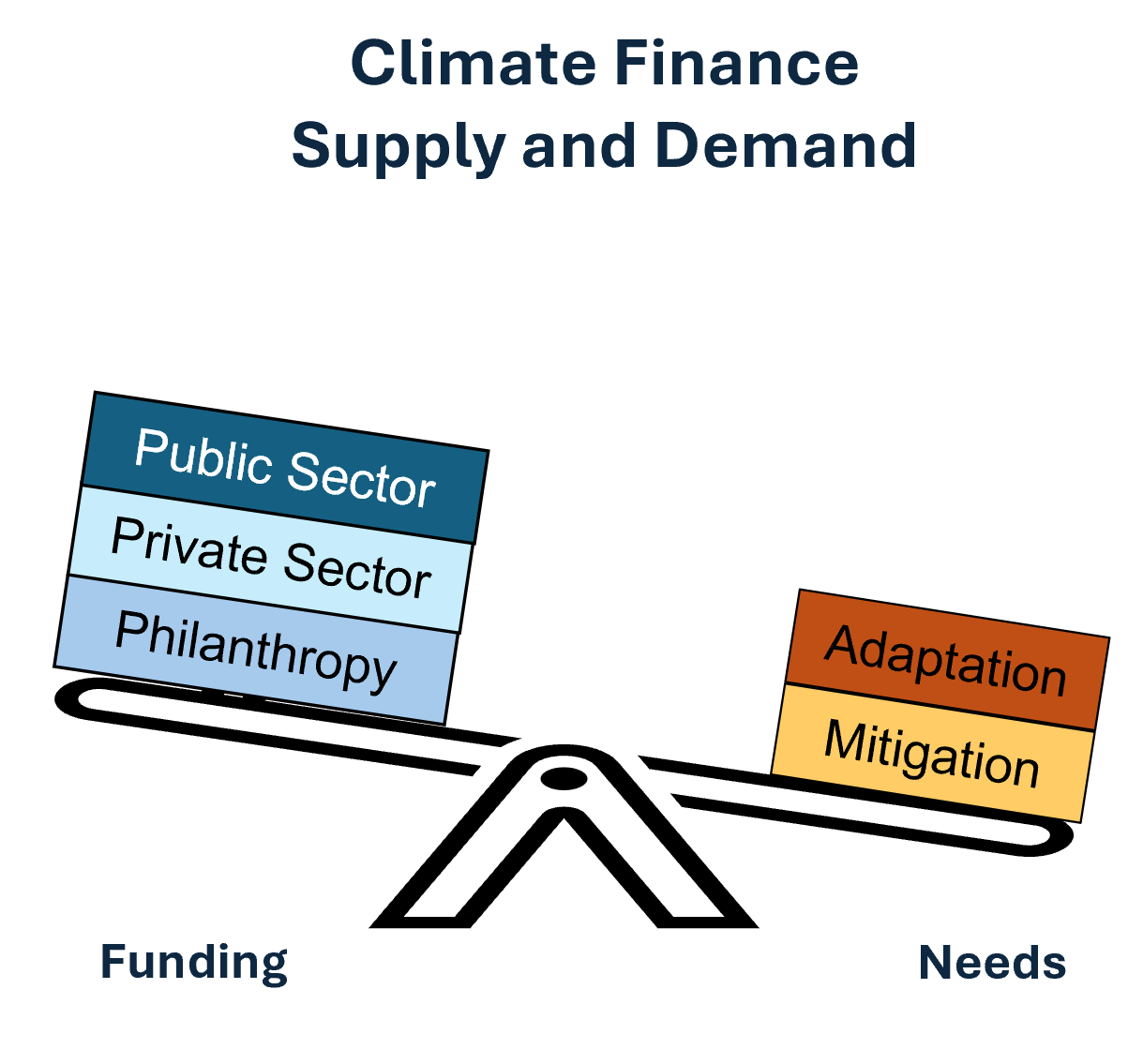
Effective Climate Finance Planning
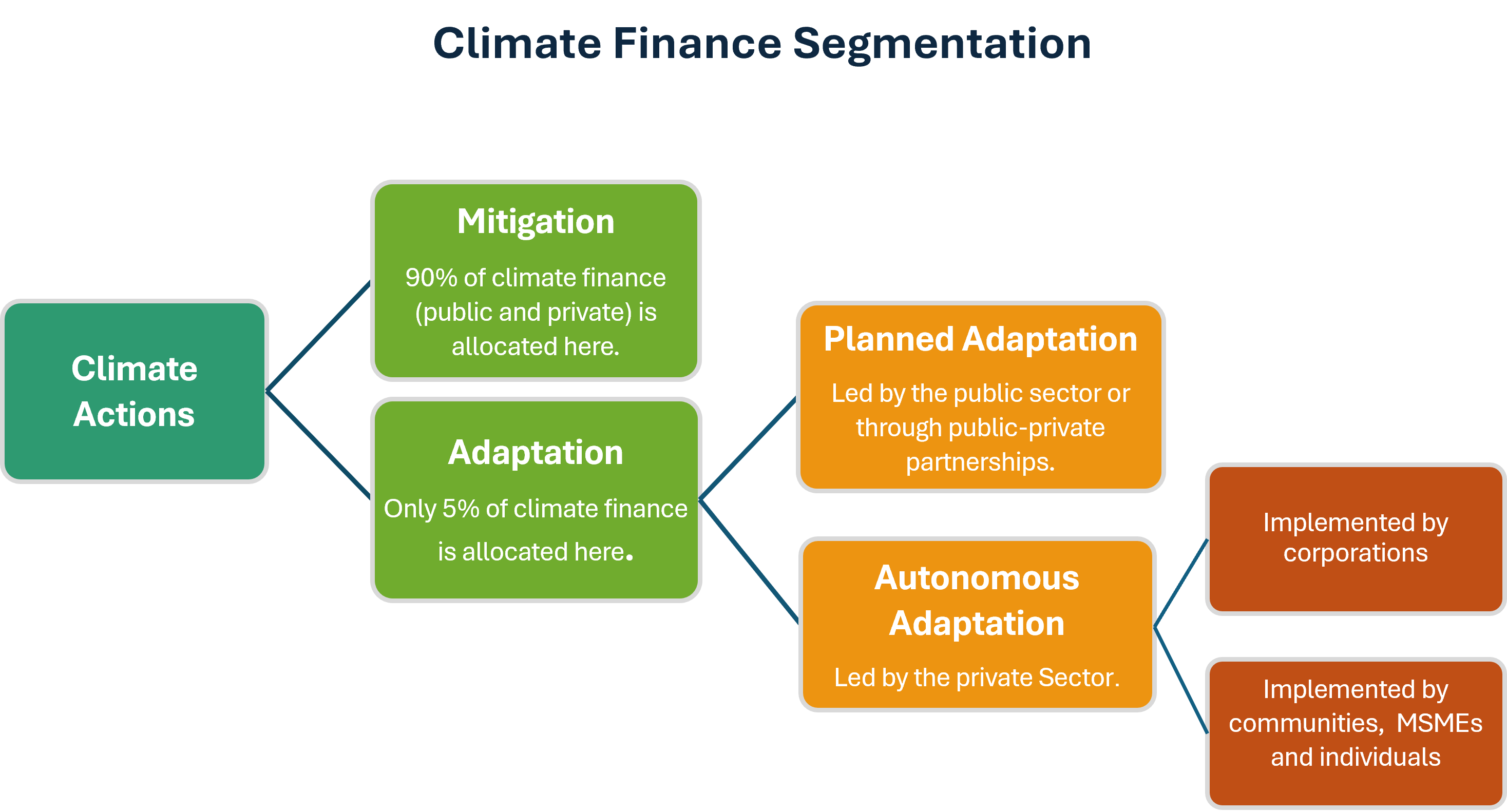
Distinguishing between mitigation and adaptation Finance is essential for effective climate planning. Mitigation focuses on reducing emissions, while adaptation enhances resilience to climate risks. Adaptation efforts can be government-led (planned) ordriven by the private sector (autonomous), each requiring tailored financial approaches. . “A Review of the Interaction Between Autonomous and Planned Adaptations" explores the interplay between these two types.
The financing needs and terms for mitigation and adaptation vary based on objectives and stakeholders, including corporations, micro,small, and medium enterprises (MSMEs), communities, and the public sector. Recognizing climate segments is crucial for effective planning.
Expanding Climate Finance Sources
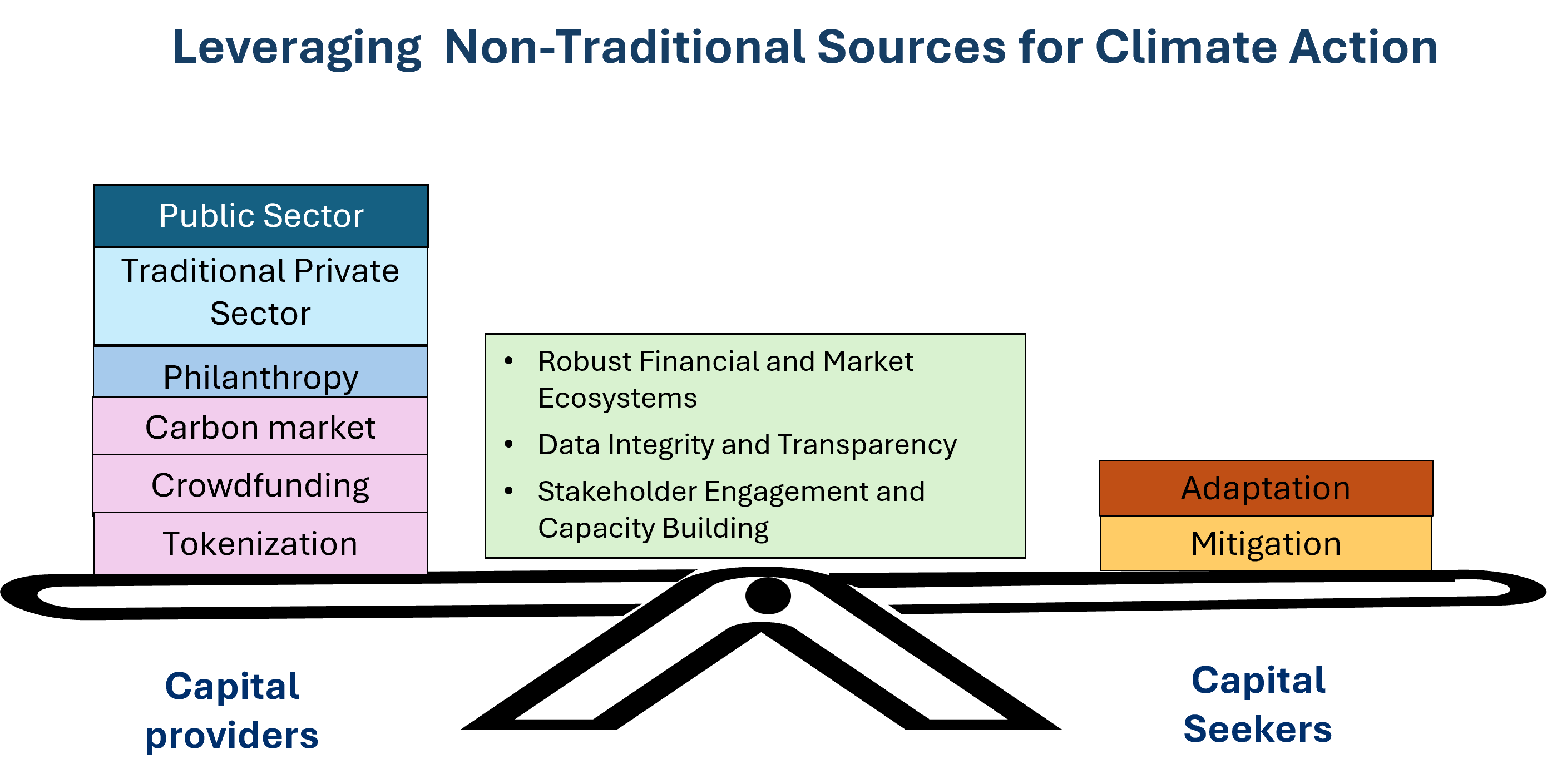
With traditional funding limited, non-traditional funding mechanisms such as carbon credits, crowdfunding, and asset tokenization can enhance climate investments by introducing new funding sources and improving liquidity and accessibility.
1. Scaling the Carbon Market
The carbon market is an evolving financial resource.Addressing data integrity, transparency, and standardization challenges willunlock its full potential. Investors and buyers experience inefficiencies,pricing opacity, and limited access for more minor participants. Strengthening the carbon market ecosystem—including certification bodies, regulations, exchange platforms,and AI-powered monitoring—can enhance efficiency and scalability.
2. Crowdfunding: Mobilizing Collective Financial Power
Crowdfunding enables individuals and organizations to support climate action directly. However, inefficient payment systems and a lack of platforms hinder its potential. Digital marketplaces, legal frameworks,and community engagement play essential roles. Innovations like The Carbon Company's credit card,, which proposes to direct a percentage of purchases toward climate projects, will showcase crowdfunding's potential for climate action.
3. Supporting Asset Tokenization
Tokenization converts physical and intangible assets (e.g.,land and carbon credits) into digital tokens, improving liquidity, trading efficiency, and accessibility. Like traditional collateral, tokenized assets can be used in decentralized Finance (DeFi), enabling investors to access liquidity without selling their assets. African startups seek tokenization to attract global investors, while other initiatives, such as carbon credit tokens, will allow small investors to engage in climate action. Strong information systems, regulatory compliance, and effective digital marketplaces are essential to enhance tokenization in developing countries.
KeyEnablers for Non-Traditional Climate Finance Sources
» Robust Digital FinancialEcosystems: Digital data enhances liquidity and efficiency. Securepayment systems, digital wallets, decentralized finance (DeFi) platforms, andregulatory frameworks are vital for facilitating transactions, managing risk,and ensuring compliance.
» Data Integrity and Transparency: Blockchain technology, AI-driven audits, and standardized metrics foster trust and refine risk-versus-return assessments for capital providers, particularly in carbon markets.
» Stakeholder Engagement and CapacityBuilding: To encourage participation, governments, businesses,and communities must be aware of new financial options. Collaboration among financial institutions, climate funds, and tech providers can effectively scalesolutions.
Progressand the Road Ahead
Climate Finance is already transforming the financial landscape through innovative mechanisms such as:
» Blended Finance combines concessional funds (like grants or soft loans) with commercial capital tode-risk investments and attract private sector participation in development projects. It aligns financial returns with social or environmental impact goals.
» Risk Mitigation Tools include insurance, guarantees, and financial instruments like currency and interestrate swaps, aiming to enhance investor confidence.
» Ecosystem Support: Training, knowledge sharing, digital and financial literacy, and preparing SMEs and small projects for bankability.
The public sector leverages below-market rates and technical assistance to support private sector capacity-building efforts and blended finance collaborations. However, challenges persist, as high operational costs hinder climate finance in developing economies.
Conversely, financial institutions are strengthening de-risking mechanisms, and carbon markets are improving transparency. Crowdfunding still requires greater awareness and the expansion of digital platforms. Tokenization presents significant potential but depends on regulatory and technological advancements.
Stronger regulations andinfrastructure are necessary, but digital transformation will be the keyenabler. Robust information systems across value chains can unlock funding,mobilize resources, and drive scalable climate solutions.